




DECATUR TOWNSHIP: A pivotal decision is approaching in Clearfield County that could determine the future of the largest Immigration and Customs Enforcement detention facility in the Northeast.
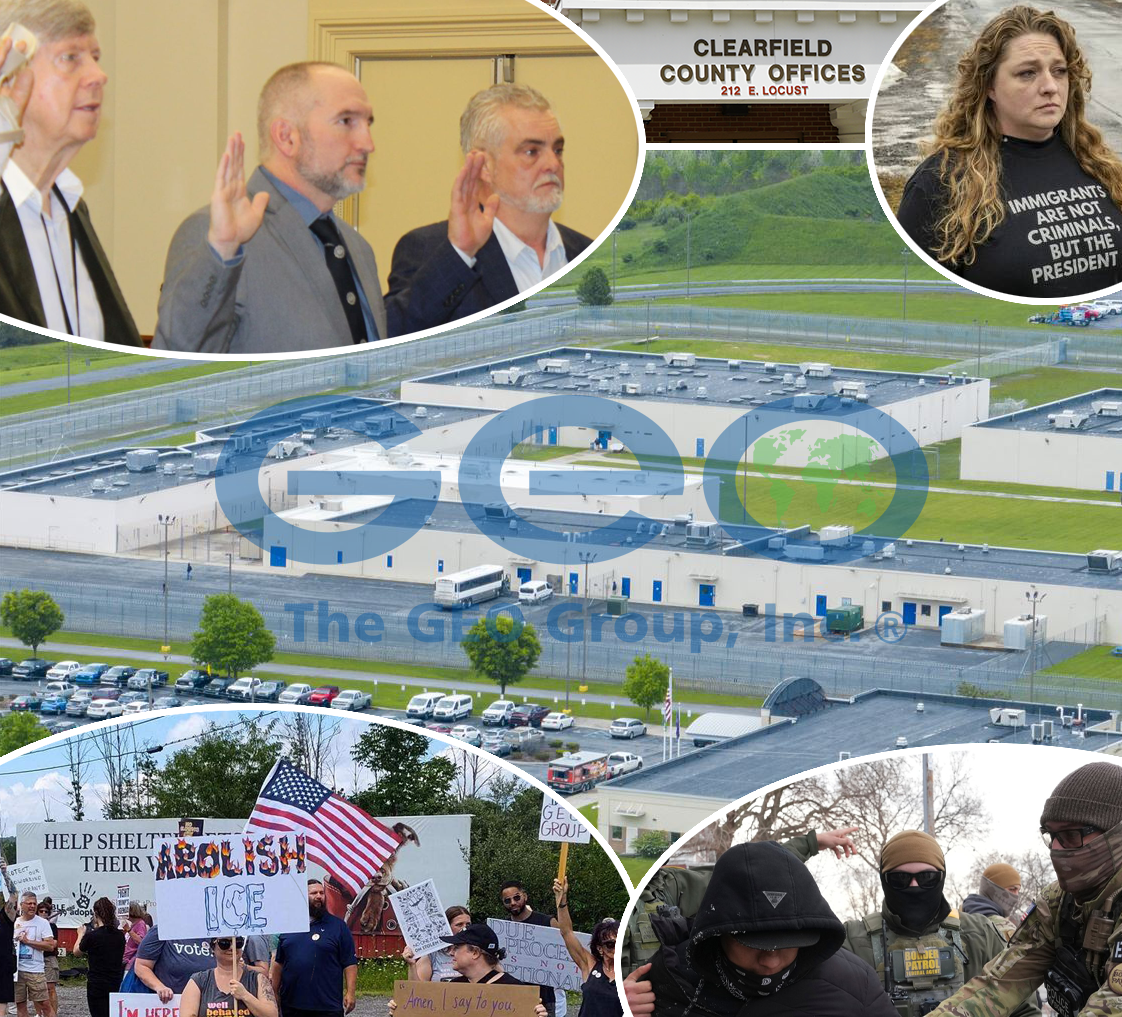
In September, a five-year intergovernmental service agreement between U. S. Immigration and Customs Enforcement (ICE) and Clearfield County is set to expire. The three-member Clearfield County Board of Commissioners will decide whether to renew the partnership that allows the privately run Moshannon Valley Processing Center to operate under federal contract.
At the center of the debate is not only immigration enforcement policy but also economic dependence, transparency, civil rights allegations and the broader role of private prisons in federal detention.
A Federal Contract, A Local Vote
The facility is owned and operated by The Geo Group, a Florida-based, publicly traded private prison corporation and ICE’s largest contractor nationwide. Moshannon Valley first opened in 2005 as a Federal Bureau of Prisons facility. In 2021, it transitioned into an ICE detention center under an agreement approved by county commissioners.
Under that arrangement, federal funds flow from ICE to Clearfield County, which then passes the money to Geo Group to operate the facility. According to Commissioner Dave Glass, the county retains a $200,000 annual administrative fee.
Glass said the county receives approximately $3 million to $4 million per month from ICE, though the total fluctuates based on detainee population and daily per-person rates. The contract itself does not specify a fixed dollar amount.
“There are millions upon millions upon millions that flow through,” Glass said, describing the arrangement as largely population-based.
With the contract expiring this September, the decision now rests with the county’s three commissioners.
Inside The Largest ICE Facility In The Northeast
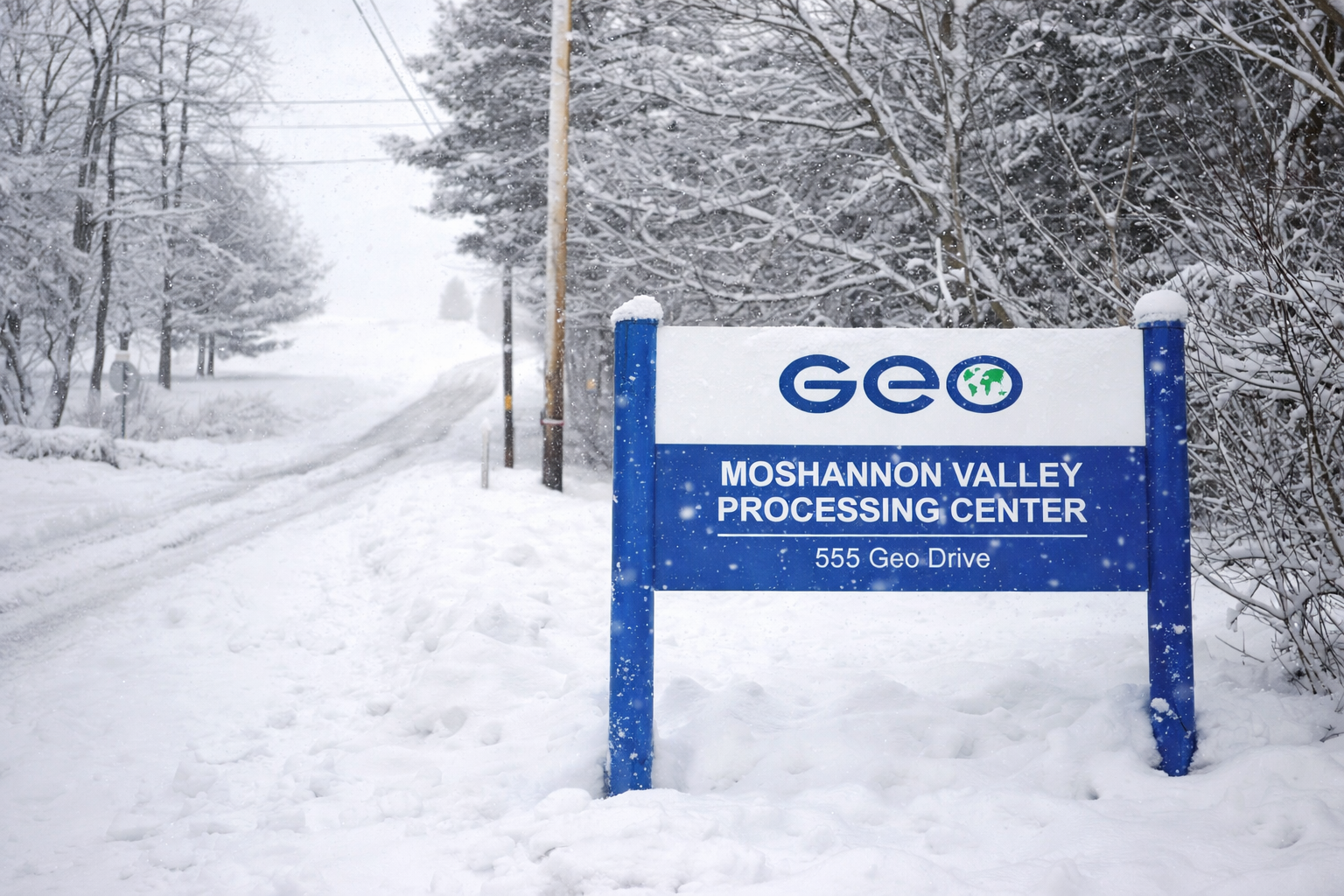
Located at 555 Geo Drive in Decatur Township, the Moshannon Valley Processing Center sits atop a wooded ridge in central Pennsylvania, blending into the landscape from afar but looming prominently up close.
The facility has a capacity of 1,876 detainees and averages about 1,650, with an average stay of approximately 50 days, according to Warden Leonard Oddo, who has led the facility since 2018 and works for Geo Group.
Oddo said detainees are classified by risk level upon arrival, with color-coded uniforms indicating status:
- Blue for low risk
- Yellow for medium-high risk
- Red for high risk
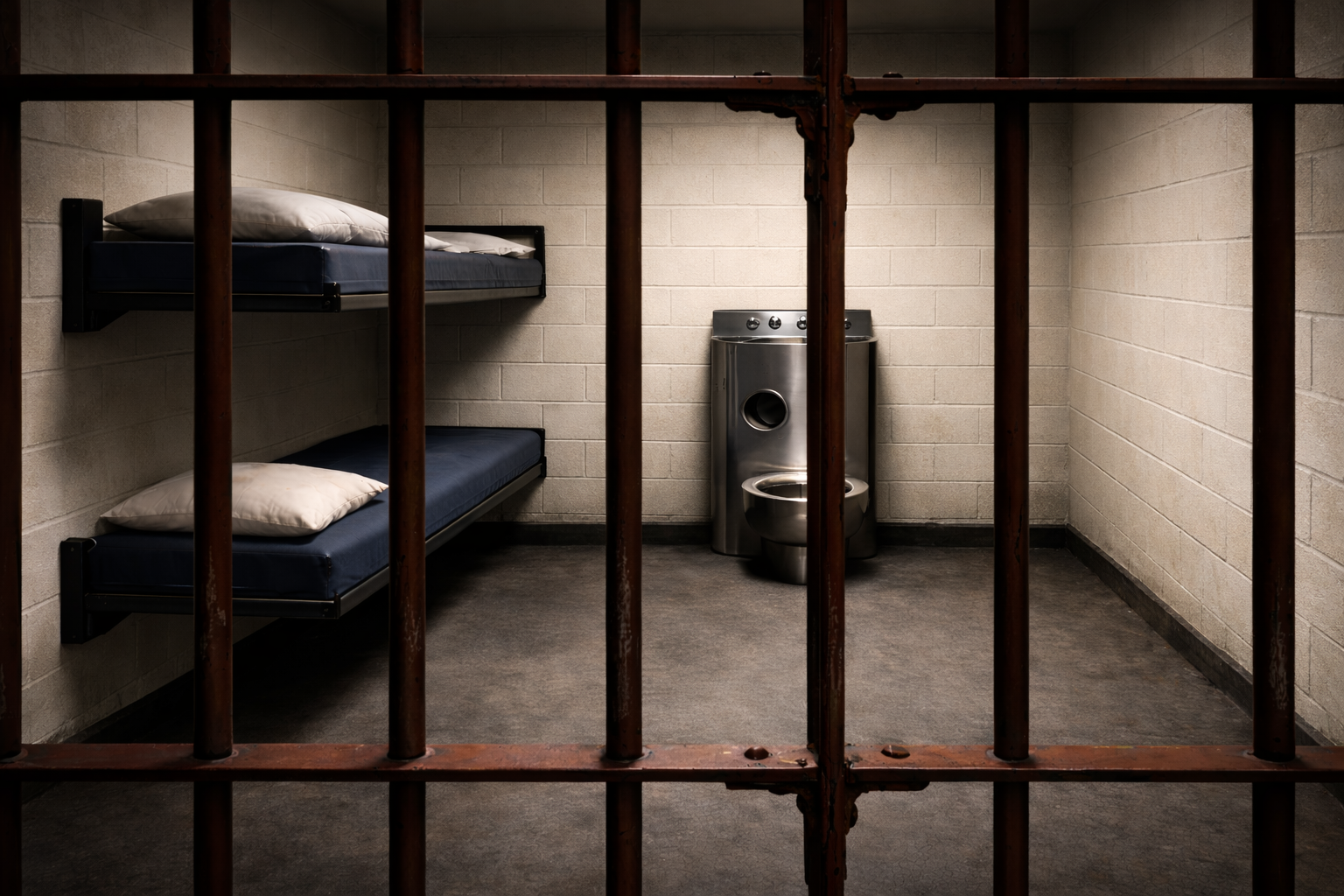
Low-risk detainees are housed separately from higher classifications. Each housing unit consists of open-bay pods that can hold up to 70–72 detainees, though current occupancy levels reportedly range between 55 and 60 per pod.
Oddo said detainees have 24-hour access to telephones, showers, recreation equipment, ICE-funded tablets for legal research and video calls, and on-site medical, dental and mental health services.
“We’ve never had overcrowding here — no one sleeping on the floor,” Oddo said.
The facility employs 417 full-time Geo staff and 27 full-time ICE employees, including medical personnel, detention officers, case managers, and administrative staff.
Allegations And Oversight Concerns
Despite its economic footprint, Moshannon Valley has drawn sustained criticism from immigrant rights advocates and some elected officials.
A September 2024 report by the Sheller Center for Social Justice at Temple University’s Beasley School of Law — titled “In the Shadow of the Valley” — detailed allegations of inadequate medical care, mistreatment by staff, racial slurs and other concerns based on interviews with detainees.
The Pennsylvania Institutional Law Project filed a Prison Rape Elimination Act complaint in October 2024 alleging sexual abuse of a female detainee.
Additionally, on Dec. 14, 2024, a 46-year-old man from Eritrea died in ICE custody at the facility after experiencing medical distress, according to an ICE detainee death notification.
Oddo has firmly rejected allegations of systemic mistreatment.
“My philosophy is, every human being deserves to be treated with dignity,” he said. “We have a well-trained, diverse staff.”
The facility holds accreditations from the American Correctional Association and the National Commission on Correctional Health Care. Oddo said the center recently received full reaccreditation compliance.
However, transparency concerns persist. Requests for media tours have required ICE approval, and as of last reporting, federal authorities had not granted access. Updated Department of Homeland Security guidance now requires members of Congress and families to submit visitation requests at least seven days in advance.
Critics argue that advance notice undermines accountability. Supporters say the protocols are necessary for security.
Community Divided: Jobs vs. Justice
The facility’s economic footprint in Clearfield County is significant.
Oddo estimates a $33 million annual economic impact, including $711,000 in taxes paid to local government and the Philipsburg-Osceola Area School District. The center is reportedly the school district’s largest single taxpayer.
Former Philipsburg Mayor John Streno, who previously worked at the facility as a corrections officer, supports its continued operation.
“The jobs are very important to my community,” Streno said. He estimates roughly 300 of the facility’s more than 400 employees live locally.
Streno also officiates weddings at the facility — more than 70 since 2021 — describing detainees as “still humans — they still have feelings.”
Other residents see little disruption. Some local business owners say the facility brings customers and stability to an economically depressed region.
Yet activists strongly disagree.
Bobbi Erickson, co-founder of Indivisible: Mayday, has helped organize protests and fund an anti-ICE billboard near the facility entrance. She argues that detainees are often awaiting immigration hearings and should not be confined in a for-profit setting.
“We don’t want to be stealing and kidnapping your neighbors,” Erickson said, describing the facility as “in our backyard.”
State Rep. Scott Conklin has criticized both ICE’s enforcement practices and the broader concept of for-profit incarceration.
“This is a privately run operation with federal contracts,” Conklin said, adding that he believes the public has a right to know more about operations inside because federal tax dollars fund it.
Pennsylvania Gov. Josh Shapiro’s administration has stated the commonwealth has no general authority over federal facilities but expressed concern about reported constitutional violations.
Economics, Ethics And The September Vote
The debate over Moshannon Valley is layered.
For supporters, the facility represents:
- Hundreds of local jobs
- Millions in regional economic impact
- Tax contributions to schools and municipalities
- A lawful federal detention function
For critics, it represents:
- For-profit incarceration
- Alleged due process concerns
- Limited transparency
- Reported inhumane conditions
The decision facing Clearfield County commissioners this September will not determine federal immigration policy. But it will decide whether the county continues serving as the contractual intermediary for ICE operations at Moshannon Valley.
Because federal dollars pass through county government before reaching Geo Group, the renewal vote carries symbolic and practical weight.
As one local official put it: the facility has a “significant impact.” Others argue that impact must be measured not only in dollars, but in human consequences.
For now, Moshannon Valley remains operational — its future tied to a three-member vote that could redefine Clearfield County’s role in one of the most contentious policy debates in America.
September’s decision will determine whether that role continues — or ends.