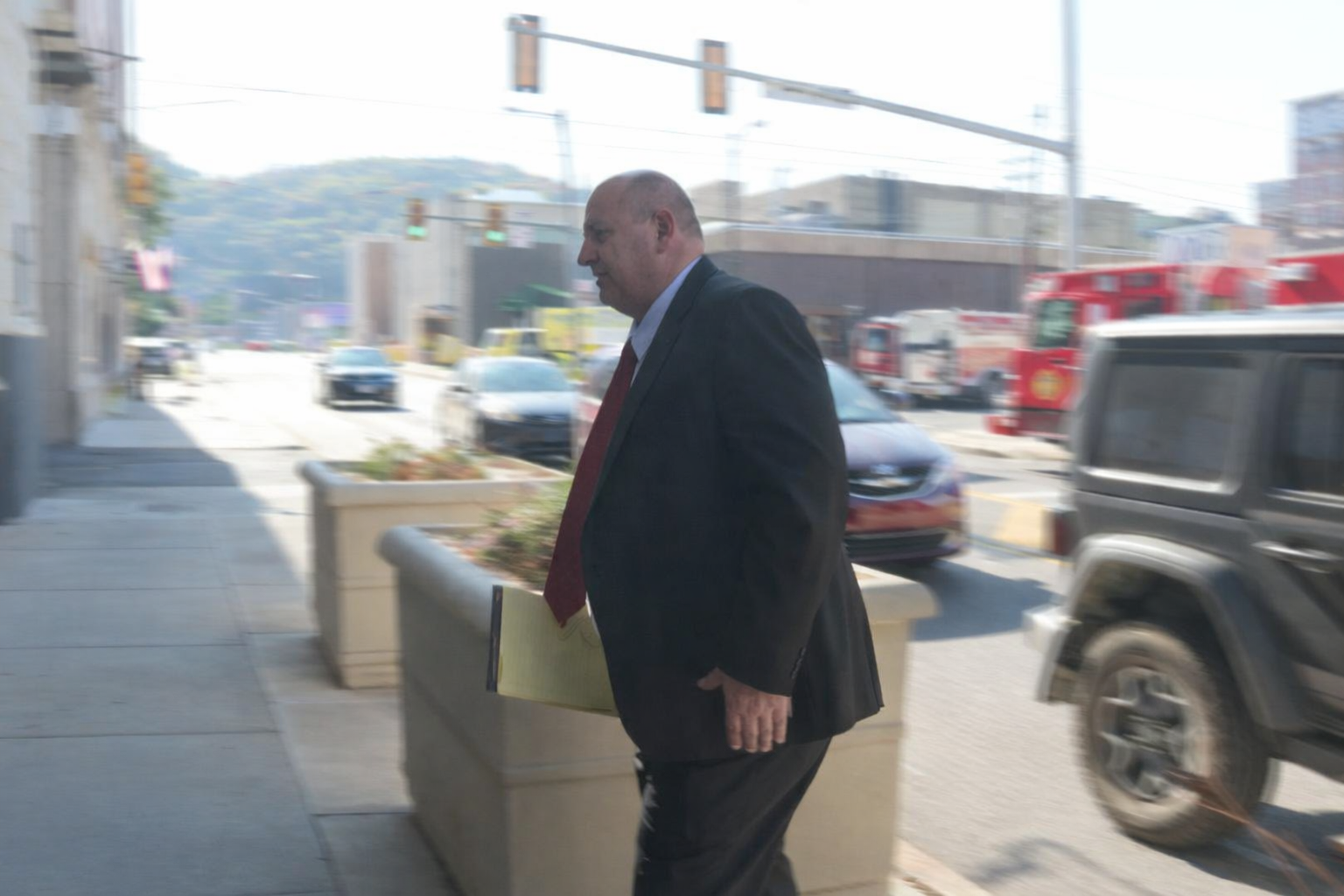






DUBOIS: Few people dispute that Shirley Dahrouge has played a visible and productive role in advancing downtown DuBois. As Executive Director of Downtown DuBois, Inc., she has overseen revitalization efforts, helped pursue state Main Street designation, coordinated events, and built partnerships with local, regional, and state stakeholders. Supporters credit her with energy, organization, and persistence during a period of transition and renewed focus on the city’s core business district.
That work has been publicly praised by the Downtown DuBois, Inc. board of directors, which recently congratulated Dahrouge on her election as Vice President of City of DuBois City Council following the municipality’s consolidation. The board expressed full confidence in her leadership and stated its support for her continued service to the community.

Public praise for downtown progress, however, does not resolve a separate and more technical issue: whether Pennsylvania law and ethics standards allow one individual to simultaneously serve as a paid executive of a downtown nonprofit and as an elected voting member and officer of the same city’s governing body.
This explainer outlines what Pennsylvania law says, why the issue arises, and why ethics experts often view such dual roles as incompatible.
The Governing Law: Pennsylvania Public Official And Employee Ethics Act
Pennsylvania’s ethics standards for public officials are governed by the Public Official and Employee Ethics Act (65 Pa.C.S. § 1101 et seq.), which applies to all elected municipal officials, including city council members.
The Ethics Act opens by declaring that public office is a public trust, and that citizens have the right to expect decisions to be made free from divided loyalties or private influence.
Key Legal Definitions
Under Section 1102, a conflict of interest is defined as a situation in which a public official uses the authority of their office, or confidential information obtained through that office, for the private pecuniary benefit of themselves or a “business with which they are associated.”
A business with which a person is associated includes nonprofit organizations where the individual is:
- An employee
- An officer
- A director
- Or otherwise receives compensation
This definition explicitly includes nonprofit corporations, not just for-profit businesses.
Why Dual Roles Raise Ethics Questions
1. Financial And Employment Interest
Downtown DuBois Inc. is a nonprofit whose mission directly intersects with city government. City councils commonly:
- Approve or deny funding, grants, or reimbursements
- Provide in-kind services such as public works, police coverage, or facilities
- Pass resolutions supporting grant applications
- Influence downtown infrastructure and capital projects
As Executive Director, Dahrouge’s salary, job performance, and program success are tied to the organization’s financial health and standing with the city. As a city council member — and Vice President — she participates in decisions that can directly or indirectly affect that organization.
Under the Ethics Act, this relationship qualifies as an association with a business that may experience pecuniary benefit from council action.
2. Use Of Authority And Influence
Ethics law does not limit conflicts to final votes.
Council leadership positions, such as Vice President, often carry:
- Agenda-setting influence
- Procedural authority
- Informal leadership among peers
- Participation in executive sessions
Even when abstaining from a vote, an official may still influence outcomes through discussion, framing, or timing. Pennsylvania ethics guidance repeatedly emphasizes that influence itself, not just a recorded vote, can create a conflict.
3. Disclosure And Recusal Are Limited Remedies
The Ethics Act allows a public official to disclose a conflict and abstain from voting on a specific matter. However:
- Disclosure does not eliminate the conflict; it only acknowledges it.
- Repeated recusals can undermine effective representation.
- Structural conflicts — where many routine matters implicate the same organization — are not cured by case-by-case abstention.
Pennsylvania Ethics Commission guidance has consistently warned that when conflicts are ongoing and inherent to the position, the appropriate remedy is separation from one of the roles, not perpetual recusal.
4. Appearance Of Impropriety And Public Confidence
The Ethics Act explicitly recognizes that public confidence is as important as technical compliance.
When:
- A city partners with or funds a downtown organization
- That organization’s executive director serves on council
- And that same director holds a council leadership position
Residents may reasonably question whether downtown interests are receiving preferential treatment — regardless of intent. Pennsylvania courts and ethics opinions repeatedly note that the appearance of impropriety alone can undermine public trust, even in the absence of wrongdoing.
Common Practice In Pennsylvania Municipalities
Across Pennsylvania, Main Street programs and municipal ethics advisors often discourage or prohibit executive directors from holding elected office in the same municipality. This is not a reflection on competence or integrity, but rather recognition that:
- The missions inherently overlap
- Conflicts are frequent and predictable
- The risk to public trust is high
In many communities, officials faced with similar circumstances have chosen to resign from one role to preserve transparency and confidence in both institutions.
The Bottom Line
Shirley Dahrouge’s contributions to downtown DuBois are widely acknowledged and publicly supported. At the same time, Pennsylvania’s Ethics Act sets clear boundaries intended to prevent divided loyalties, recurring conflicts, and erosion of public trust.
When a paid executive of a nonprofit that regularly interacts with city government also serves as a voting and leadership member of that government, the conflict is not hypothetical — it is structural.
Under Pennsylvania ethics standards, such situations typically require a choice: serve the nonprofit or serve on city council, but not both.
Discuss this article on our page.